Lip blush is a beautiful service when the goal is soft colour, better definition, and a fresher bare-lip look. It can make pale lips appear more alive, help uneven tone look more balanced, and give the mouth a gentle tint without the feeling of wearing lipstick all the time. But the part clients often underestimate is healing.
Fresh lip blush is not the final result. The colour you see right after the appointment will change. The lips may feel tender, dry, brighter than expected, lighter than expected, or temporarily uneven as they move through recovery. This is normal for many clients, but it can feel stressful if nobody explains the rhythm beforehand.
At Proxima Beauty in Mississauga, the conversation around lip blush includes design and colour, but also aftercare, healing, and patience. A pretty result depends on all of it.
Lip blush is meant to heal softer
Immediately after treatment, lips often look more vivid than the final healed colour. That fresh brightness can be exciting for some clients and alarming for others. The important thing to remember is that fresh pigment sits in skin that has just been treated. It is not showing you the final settled shade.
As healing begins, colour may soften significantly. The lips can go through a phase where they look lighter than expected, then settle into a more balanced tone. This is why judging the result too early can create unnecessary anxiety.
Lip blush is usually meant to look like a tint, not a heavy lipstick tattoo. The healed colour should work with your natural lip tone and undertone. It should make the mouth look fresher while still feeling easy on bare-skin days.
Colour selection is personal and technical
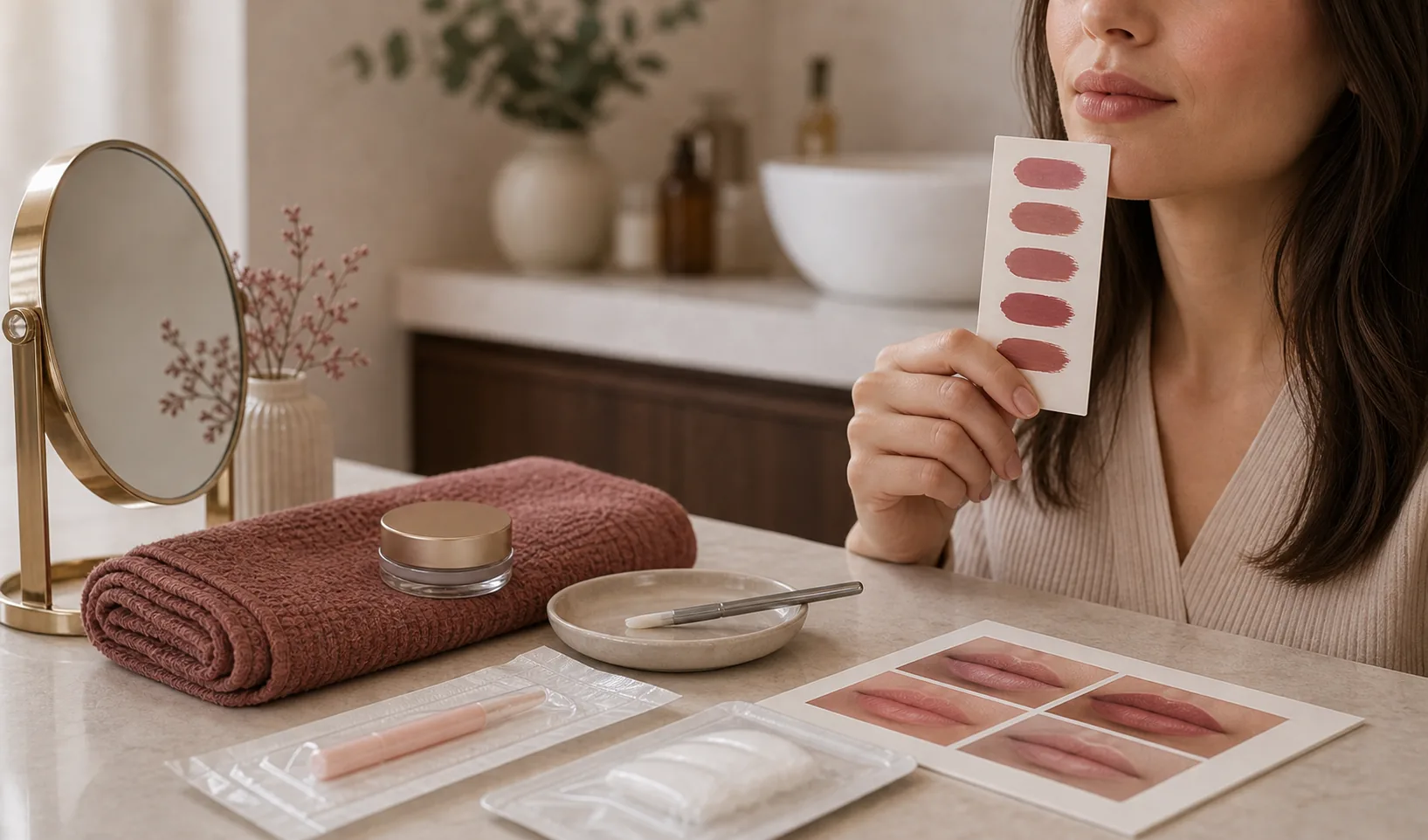
Choosing a lip blush colour is not the same as choosing a lipstick. Lipstick sits on top of the lip and can be wiped away. Lip blush pigment heals within the skin, which means your natural undertone, lip depth, circulation, and healing response all influence the final look.
A colour that looks perfect in a tube may not heal the same way in your lips. A shade that looks subtle on one client may be too bright on another. A warm colour may be used for a specific reason. A neutral colour may heal differently depending on the natural base.
This is why consultation matters. Your provider should ask what you wear day to day, what colours you usually reach for, whether you prefer pink, peach, rose, mauve, brown, or berry tones, and whether your goal is definition, warmth, balance, or visible colour.
The best shade is not always the prettiest swatch. It is the shade most likely to heal into the result you will actually wear.
The first few days can feel dramatic
After lip blush, the lips may feel tender, tight, dry, or swollen. The colour may look bold at first. Then the lips may begin to flake or peel. During this phase, the most important rule is simple: do not pick.
Picking can disturb pigment and irritate the lips. It may create patchiness or prolong healing. Even if a flake looks ready, let it release naturally. The healing phase is temporary, but the way you treat the lips during that phase can affect the final result.
Your provider will give specific aftercare instructions. Follow those instead of mixing advice from videos, forums, or friends. Permanent makeup healing is not a time for improvising.
Hydration helps, but product choice matters
Lips can feel dry during healing, and aftercare usually includes guidance around keeping them comfortable. Use only what your provider recommends. Random balms, active ingredients, fragranced products, or plumping glosses may not be appropriate while the skin is healing.
It can be tempting to apply more and more product because dryness feels uncomfortable. The better approach is to follow the aftercare rhythm you were given. Too much product, the wrong product, or constant touching can interfere with healing.
Also think about habits. Licking the lips, biting flakes, drinking very hot beverages carelessly, or rubbing the mouth with a towel can all irritate the area. Small habits matter more when the skin is recovering.
Cold sore history should be discussed
Clients with a history of cold sores should tell their provider before booking lip blush. Lip treatments can trigger outbreaks in some people, and planning ahead may be important. This is not something to be embarrassed about. It is common, and it is exactly the kind of detail a provider needs to know.
The consultation should include health history, medications, allergies, previous cosmetic tattooing, and any concerns around healing. Lip blush may look like a beauty service, but it still involves the skin and should be treated with care.
If you experience anything during healing that feels outside the instructions you were given, contact the clinic. Do not try to diagnose a reaction or outbreak by guessing.
The colour may look uneven before it settles
One of the most nerve-wracking parts of lip blush healing is the uneven phase. The lips may look patchy while flakes release. Some areas may appear lighter. The border may seem different from the centre. This does not automatically mean the final result is patchy.
Healing is a process. The skin is renewing, and pigment is settling. The final healed result should be assessed after the appropriate healing period, not during the most awkward middle days.
This is also why touch-ups exist. The first appointment creates the foundation. A touch-up can refine areas that healed lighter, adjust balance, and strengthen the result where needed. A touch-up is not a failure; it is part of many permanent makeup plans.
Lip blush should respect your natural shape
Clients sometimes ask if lip blush can make the lips look bigger. It can create the impression of more definition and more even colour, but it should not be used to draw far outside the natural lip tissue. Overextending the border can heal poorly and look unnatural.
A beautiful lip blush result respects the true lip shape. It can clarify a soft border, balance asymmetry, and make the mouth look more awake, but it should not pretend to be filler. Lip blush and lip filler are different services with different purposes.
If you are considering both, timing and order should be discussed. Do not assume they can be booked close together without planning. Your provider can help you understand what should happen first and how much healing time is needed between appointments.
Plan around your calendar
Lip blush should be scheduled with life in mind. Avoid booking right before a major event, vacation, or photo session. The healing phase may include dryness, flaking, temporary intensity, or temporary fading. You want time to heal before you need the lips to look settled.
Also think about food, workouts, sun exposure, and social plans. If you know you will be tempted to ignore aftercare because of your schedule, choose a different week. A good result is easier when your life gives the treatment room to heal.
This is especially true for first-time clients. Once you know how your lips respond, future appointments may feel easier to plan. The first time deserves space.
Your everyday makeup style still matters
Lip blush should fit the way you actually live. If you rarely wear makeup, the colour should usually stay soft enough to feel natural with bare skin. If you wear lipstick every day, you may be comfortable with more visible colour, but the healed result still needs to work on the days you do not apply anything over it.
Bring your favourite lip products or photos of colours you like. They help explain your taste, even if the exact shade cannot be copied into the skin. The consultation is where your provider translates that taste into a pigment plan that has a better chance of healing naturally.
What healed lip blush should feel like
The final result should feel wearable. It may look like your lips have a little more colour, a cleaner border, or a more even tone. It should still work with your face when you are not wearing makeup. You should be able to add gloss or lipstick when you want more, but not feel unfinished without them.
That flexibility is what makes lip blush appealing. It does not have to replace makeup. It can simply make your natural lips look more alive.
At Proxima Beauty, lip blush is approached as a soft enhancement rather than a heavy statement. The appointment is about colour that suits your undertone, shape that respects your mouth, and healing guidance that protects the work.
If you are considering lip blush in Mississauga, come prepared to talk about your usual lip colours, your bare-lip concerns, your health history, and your schedule. The best result is not rushed. It is designed, healed, refined, and then quietly enjoyed every morning.